
The Role of Culture in Effective Daily Standups

Daily standups are often treated as a process.
But in reality, their success depends far more on culture than format.
You can follow every Agile rule, ask the right three questions, and keep the meeting under 15 minutes — yet still end up with updates that feel robotic, rushed, or disconnected.
In 2026, high-performing teams understand something important:
The effectiveness of daily standups is shaped by team culture — not just structure.
Let’s explore how culture in daily standups determines whether they create clarity… or just consume time.
Why Culture Matters More Than the Agenda
Many teams ask:
How to make daily stand-up effective?
What is the 3-5-3 rule in Agile?
What are the rules for daily stand-up ground?
Those are valid questions.But even the best framework fails without the right environment.
An effective standup culture encourages:
Psychological safety
Clear ownership
Honest blocker reporting
Respect for time
Focus on outcomes, not performance
When culture supports openness and clarity, daily standups become alignment tools — not status reports.
The 3 Core Cultural Foundations of Strong Standups
1️⃣ Psychological Safety
If team members feel judged, they will:
Hide blockers
Give vague updates
Avoid admitting delays
A healthy standup culture allows people to say:
“I’m stuck.” “I need help.” “This isn’t clear yet.”
That honesty saves time and prevents bigger problems later.
2️⃣ Ownership Over Performance
In unhealthy cultures, standups become performance theater. People report what sounds productive instead of what moves work forward.
Effective cultures shift the focus to:
Progress toward shared goals
Dependencies
Team support
The question is not: “What did you do?”
It’s: “What helps the team move forward today?”
3️⃣ Clarity Over Conversation
Standups are not brainstorming sessions.
Strong cultures respect:
Brevity
Relevance
Decision-oriented updates
If discussion is needed, it happens after the standup — not during it.
The 3–5–3 Rule in Agile (And Where Culture Fits)
Some teams use the 3–5–3 rule to structure daily standups:
3 questions per person
5 minutes max per update
3 follow-ups after the meeting
While helpful, structure alone doesn’t guarantee effectiveness.
Without supportive culture:
People rush through updates
Follow-ups don’t happen
Questions feel repetitive
With strong culture:
Updates are focused
Follow-ups are owned
Communication improves daily
The rule supports the system. Culture determines the outcome.
What Are the Ground Rules for Daily Standups?
Most Agile teams agree on a few core ground rules:
Ground Rule | Why It Matters |
Keep it short (15 minutes max) | Protects focus time |
Stay on topic | Prevents meeting drift |
Everyone participates | Builds accountability |
Blockers are visible | Enables fast problem-solving |
No deep dives | Respect team time |
But here’s the deeper truth:
Rules create order. Culture creates trust.
Without trust, even perfect rules feel forced.
How to Make Daily Stand-Up Effective (Beyond Process)
If you're asking how to make daily stand-up effective, start with culture shifts:
✔ Normalize Blockers
Celebrate transparency. Don’t punish it.
✔ Reward Clarity
Encourage concise, outcome-focused updates.
✔ Separate Updates from Discussion
Protect the standup from becoming a meeting about meetings.
✔ Support Async Options
Not every team thrives in live meetings — especially remote or distributed teams.
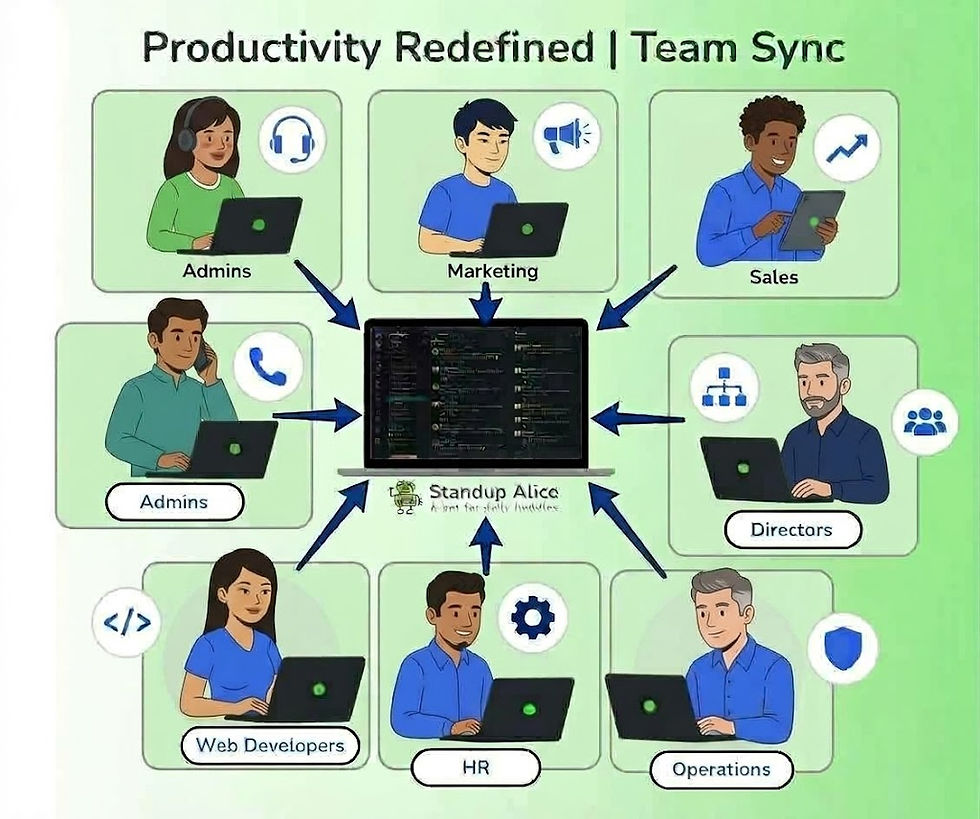
Many modern teams now combine Slack with structured async updates through tools like Standup Alice, allowing team members to share clear daily progress without scheduling friction.
If you're looking to improve your standups further, these guides may help:
Culture in Remote & Hybrid Teams
Remote teams face extra challenges:
Time zone differences
Reduced non-verbal cues
Notification overload
That’s where standup culture becomes even more critical.
Async-first teams often ask:
What should be discussed in a stand-up?
What is the main purpose of a standup meeting?
The answer is simple:
Alignment and visibility.
Not micromanagement. Not attendance tracking. Not daily interrogation.
Async tools help reinforce cultural values like:
Respect for deep work
Equal participation
Structured clarity
When combined with Slack workflows, Standup Alice helps reinforce positive standup culture through automated reminders, summaries, and visibility — without adding noise.
Signs Your Standup Culture Needs Work
If you notice:
Same updates every day
People multitasking during the meeting
No one reporting blockers
Standups running long
Energy feeling low
The issue may not be the format.
It may be the culture around it.
Culture-Driven Standups vs Process-Driven Standups
Process-Driven Standup | Culture-Driven Standup |
Focus on rules | Focus on outcomes |
Status reporting | Shared alignment |
Surface-level updates | Meaningful transparency |
Meeting-heavy | Async-friendly |
Low engagement | High ownership |
The difference is subtle — but powerful.
Where Standup Alice Supports Strong Culture
While tools don’t create culture, they can reinforce it.
Standup Alice supports culture-driven daily standups by:
Encouraging structured updates
Reducing meeting fatigue
Providing automated summaries
Improving visibility across teams
Supporting async participation
This helps teams stay aligned without forcing constant presence.
Final Thoughts
Daily standups succeed when culture supports clarity.
The best teams don’t just follow Agile rules — they build environments where:
Honesty is safe
Updates are meaningful
Time is respected
Alignment is continuous
In 2026, effective daily standups are less about standing up — and more about standing together.
When culture leads, standups work.


Comments