
What to Do When Team Members Skip Daily Standups

Daily standups are designed to create alignment, clarity, and momentum. Yet even on strong teams, skipped standups happen — especially in remote, hybrid, or async-first environments.
In 2026, the question isn’t why someone missed a standup once.
The real question is:
How do teams design a system where participation is easy, safe, and consistent — without micromanagement?
This guide explores how modern teams handle skipped standups, what the 3-5-3 rule in Agile really means, who should attend daily standups, and how leaders can encourage participation in a healthy, scalable way.
Why Skipped Standups Happen (Even on Good Teams)
Most missed standups are not a motivation problem. They’re a system problem.
Common causes include:
Standups scheduled at inconvenient times across time zones
Updates that feel repetitive or unclear
Meetings that run long or lack purpose
Team members unsure if their input actually matters
Too many tools, too much friction
High-performing teams treat skipped standups as a signal, not a failure.
What Is the 3-5-3 Rule in Agile?
The 3-5-3 rule is a lightweight guideline that helps teams keep standups focused and respectful of time.
Rule Element | What It Means |
3 Questions | What did you work on? What are you working on? Any blockers? |
5 Minutes | Keep updates concise and easy to scan |
3 Core Outcomes | Alignment, visibility, and early risk detection |
In 2026, teams often apply this rule asynchronously, making it even easier for everyone to participate without calendar pressure.
Who Should Necessarily Attend the Daily Standup?
A daily standup works best when it includes only the people who actively contribute to the work.
Should Attend:
Engineers, designers, and contributors doing sprint work
Product owners (optional but valuable)
Team leads focused on removing blockers
Should Observe, Not Lead:
Stakeholders
Managers not involved in daily execution
The goal isn’t status reporting upward — it’s team alignment sideways.
How to Manage Team Members Who Do Not Participate
Managing non-participation is about designing better participation, not enforcing attendance.
1. Remove the Pressure
Some people skip standups because speaking live feels stressful. Async updates remove that barrier.
2. Make the Value Obvious
When updates lead to:
Faster decisions
Fewer follow-ups
Clearer priorities
Participation becomes self-motivated.
3. Reduce the Time Cost
If updates take more than a minute or two, the system is too heavy.
4. Use Gentle Automation
Modern teams rely on tools that:
Send reminders automatically
Collect updates consistently
Share summaries without manual work
This keeps the rhythm intact without anyone “chasing” updates.
Handling Skipped Standups Without Blame
Strong teams follow one rule:
Fix the process before questioning the person.
Instead of asking:
“Why didn’t you join?”
Ask:
“What made this hard to participate in?”
Patterns matter more than individual misses. One skipped update is normal. Repeated friction points reveal where the system needs improvement.
Why Async Standups Solve Participation Gaps
Async standups have become the default for many teams in 2026 because they:
Respect time zones and focus hours
Give everyone equal voice
Create a written record of progress
Reduce meeting fatigue
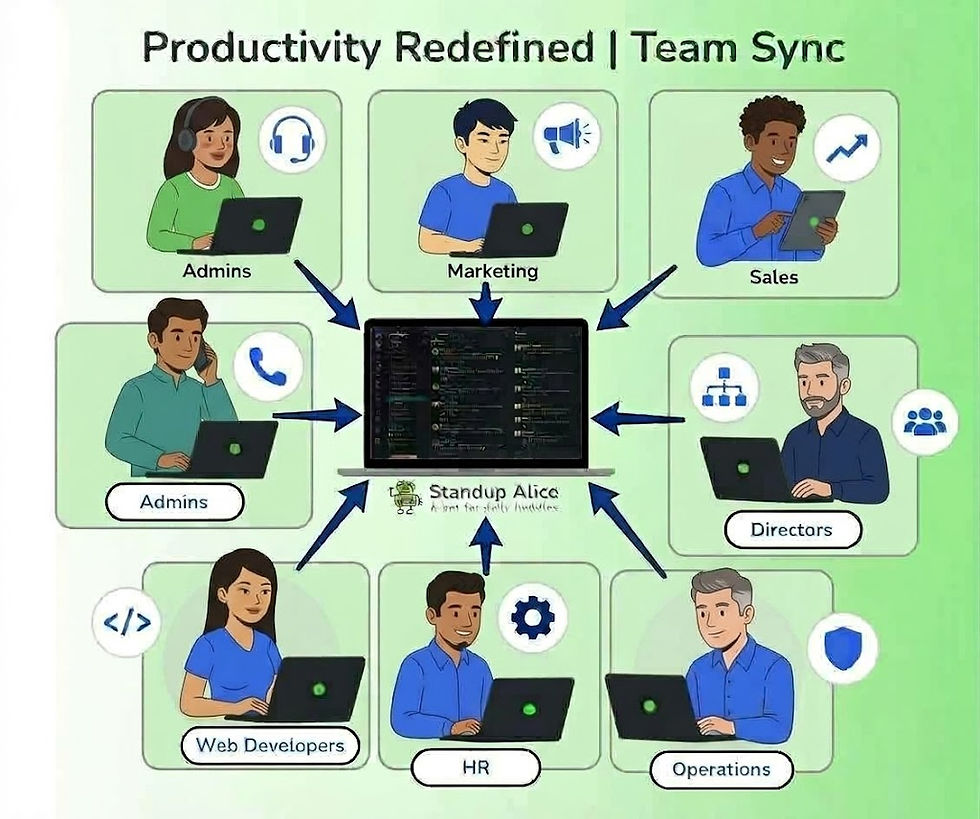
Tools like StandupAlice support this shift by making participation:
Fast
Structured
Low-pressure
Visible to the whole team
This transforms standups from a daily obligation into a lightweight communication habit.
What to Do When Skips Become a Pattern
If missed standups become frequent:
Review update length and clarity
Confirm everyone understands the purpose
Simplify the questions
Shift fully async if needed
Review participation trends over time
Data-driven visibility beats assumptions every time.
How StandupAlice Helps Maintain Healthy Participation
StandupAlice is designed around one principle: Make daily updates easier than skipping them.
It helps teams by:
Sending automatic reminders
Providing consistent update prompts
Generating clean summaries
Highlighting participation trends
Removing manual follow-ups
This allows leaders to focus on supporting the team, not policing attendance.
Related Reading (For Deeper Insight)
If you want to refine your standup practice further, these articles expand on modern team communication:
Final Thoughts
Skipped standups aren’t a failure — they’re feedback.
In 2026, the best teams don’t force participation. They design systems where participation feels natural.
When daily updates are:
Easy
Purposeful
Low-friction
Teams show up — consistently, honestly, and willingly.
And that’s where real alignment begins.


Comments